Friday, April 15, 2011

History of Chem (by:Mandy)

drop the math, and lets learn a bit about the history of chemistry.
here are some of the important historical chemists:

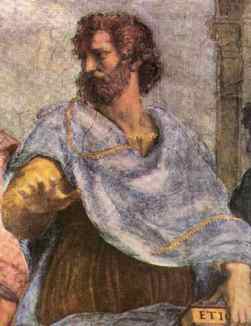
Aristotle believed matter was made of different combinations of earth, air, fire, and water Lavoisier, A.L. (1743-1794)Discovered nitrogen; studied acids and described composition of many organic compounds.

Dalton, John (1766-1844)He proposed atomic theory, stated law of partial pressure of gases. His ideas led to laws of multiple proportions, constant composition and conservation of mass.

Thomson, Sir J.J. (1856-1940)Research on cathode rays resulted in proof of existence of electrons. Won the Nobel Prize in 1906

Rutherford, Ernest (1871-1937): Discovered that the atoms of the heavier elements, which had been thought to be irreversible, actually decay into various forms of radiation. Rutherford was the first to establish the theory of the nuclear atom and discovered rays: alpha, beta, and gamma. He also revealed the half-life of radioactive elements and applied this to studies of age determination of rocks by measuring the decay period of radium to lead-206. Have fun!

Tuesday, March 8, 2011

#stoichiometry calculations involving particles - moles - mass# by:mandy

Stoichiometry???
STOY-KEE-AHM-EH-TREE is a study of amounts of substances that are involved in reactions! lots of calculations involved. So, think Math!
what are the steps to calculationg the amounts od substances in a reaction?
1. write equation                                                
2.balance
3."road map"                                                               
4.calculations!
now, lets try an example:
step 1:
Mg + HCl --> MgCl2 + H2
since this reaction is not balanced yet, we'd have to preform step 2:
Mg + 2HCl --> MgCl2 + H2
step 3:
Note that when we are making a "road map", substances CANNOT be diretly convert from grams of one compound to grams od another. Instead, we have to go through moles :)
grams (x) <--> moles (x) <--> moles (y) <--> grams (y)
final step *4:
6.0g H2 x 1 mol H2/2.02g H2 x 1 mol Mg/ 1 mol H2 x 24.3g Mg/ 1 mol Mg = 72.2g Mg
YAY! good job! that was the step by step calculation.


Molarity and Stoichiometry - Isabelle Cheng

MOLARITY AND STOICHIOMETRY
Do you remember molarity?!?!?!?!?! 
Here are the formulas:
M = mol
       L
L = mol
       M
mol = M X L
Example: 
You have 340 mL of 0.5 M NaBr solution. Since you know that you have a 0.5M solution, you know that you must have 0.5mol / L water. So, if 0.5 moles are in a liter, how many moles are in 0.340 liters? (340 mL / 1000)
M = mol solute / L water
0.5 = x mol solute / .340 L
x = (0.5)(.340) = 0.17
M = mol solute / L water
x M = 0.17 mol solute / (.340 + .560) L water
x M = 0.19 mol / L
Gas Stoichiometry Example:
Ammonia gas is reacted with sulfuric acid to form the important fertilizer ammonium sulfate. What mass of ammonium sulfate can be produced from 85 kL of ammonia reacting.


_1_NH3
+
_1_H2SO4
_1_(NH4)2SO4


1.
85 kL=3.469 mol.NH3
24.5 L/mol   
2:
3.469 mol.X_1_(NH4)2SO4=3.469 mol.(NH4)2SO4
  _1_NH3   
3.
3.469 mol.
X
114 g
=
395 g
mol
More exercises! 


 What volume of oxygen at STP is needed to completely burn 15 g of methanol (CH3OH) in a burner?

Find the molarity of a solution that contains 25.0 g of sodium hydroxide in 300.0 mL of solution. 

If 20.5 mL of H3Po4 with an unknown molarity react with 25.0 mL of 0.500 M KOH, according to the above reaction, what is the molarity of H3PO4?


Tuesday, February 22, 2011

Enthalpy Calculations...*sigh*

Sooooooooo, did you ever think we were done with the mole?
DON'TTHINK THAT WAY because I'm about to prove you wrong.
Enthalpy calculations=the usage of MOLES -insert dramatic scream-
And the return of the mole also means the return of sig figs, btdubs. -insert double dramatic scream-

That my friends was a double double, double double combo. (:

Let's get started:
ΔH--> change in energy of a reaction; expressed in kJ/mol

Here is an example:
 C10H8+12O2-->10CO2+4H20+436kJ
Hence, ΔH=

1)      -436kJ
     1 mol C10H8

2)   -436kJ
    12 mol O2

3)    -436kJ
    10 mol CO2

4)    -436kJ
    4 mol H2O

Once you've identified these, it will be easy to do conversions.


eg. Calculate how many grams of O2 would be needed to produce 1500kJ of energy.

-1500kJ x 12 mol O2 x  32g    = 1321.1 kJ
                 -436kJ         1 mol

**SIG FIGS!!**   So, the answer is 1300 kJ.


Watch this video if you're still confused!!


GOOD LUCK WITH THIS CONFUSING SECTION!! :D


Written by Jialynn.

Sunday, February 20, 2011

Exothermic and Endothermic (Mandy)


ENDOTHERMIC: absorb energy to break bonds
EXOTHERMIC: release energy to join bonds

Energy diagrams allow one to observe endothermic or exothermic reactions.

in above diagram, "starting products" are called "energy of reactants", which indicates the total potential energy of all reactants. The "transition state" is also known as "energy of activated complex".

one thing that the above diagram did not mention is the "change in enthalph" (delta H). The change in potential energy during the reaction. It is the energy of products - energy of reactants.

Therefore, if "delta H" is positive, it is an ENDOTHERMIC reaction.
                 if "delta H" is negative, it is an EXOTHERMIC reaction.

Lets look at this concept from another point of view:

CH4 + 2O2 -> CO2 + 2H2O + 812kJ

Endothermic: reactants have the energy term on the left hand side and positive 'delta H'
Exothermic: reactants have the energy term on the right hand side and negative 'delta H'

Time for some examples!! --->
In this reaction, the total energy of the reactants is 80 kJ mol-1, the total energy of the products is -90kj mol-1 and the activation energy for the forward reaction is 120 kj mol-1.
a. Draw a diagram of the energy profile for this reaction. Label the diagram.
b. State whether the reaction is endothermic or exothermic.
c. Calculate the change in enthalpy.

ans: b. endothermic reaction
       c. 10kJ


an interesting video :) ENJOY.

Friday, February 4, 2011

February 4, 2011 - Isabelle Cheng - Lab 5B - Types of Chemical Reactions

Isabelle Cheng
Block 2-2 Chemistry 11
February 4, 2011
Ms. Chen
Lab 5B - Types of Chemical Reactions
In this lab, there are four different kind of reactions. Synthesis, decomposition, single replacement, and double replacement. Synthesis has the formula of A+B --> AB and the decomposition has the formula of AB ----> A + B. The single replacement is AB+X----> A + XB. Double replacement’s formula is AB + XY ----> AY + XB. In the lab, we have to identify which reaction is either synthesis, decomposition, single replacement, or double replacement. 
In the lab, my partner and I got different equipment such as a lab burner, test tubes, test-tube clamp and the different substances to experiment with. The substances are copper wire, iron nail, copper (II) sulfate solution, solid copper (II) sulfate pentahydrate, water, calcium chloride solution, sodium carbonate solution, mossy zinc, and other materials.
There were 7 reactions and they each had different substances in the test tubes. The first one is holding the crucible and burning the copper wire. The wire then turns into a silver color. After that when you hold it for a longer period of time it gets more burnt. The second reaction is we had to clean the iron nail with a piece of steel wool until it was shiny. After we placed it in the copper (II) sulfate solution so that half of the nail was covered. We had to wait for 15 minutes. While doing that we moved onto reaction 3. The third reaction we put solid copper(II) sulfate pentahydrate in the test tube until it was one third full. Then we put it over the flame and slowly moved it in all directions. Reaction 4 was to put 2-3 drops of water into Reaction 3 when it was cooled. Reaction 5 was requesting us to fill a test tube of one quarter of the tube with calcium chloride solution and same as sodium carbonate solution. For reaction 6 we took a piece of mossy zinc in a test tube and put some hydrochloric acid solution to mix it in with the zinc. After doing that Reaction 7 we fill up the tube half full for hydrogen peroxide solution. We also add a small amount o manganese (IV) oxide. We then test the gas and wait until the test tube starts bubbling and glowing. In the end, the lab had interesting before and after effects. 

Wednesday, February 2, 2011

Double Replacement, Neutralization, and Combustion - Feb. 2, 2011 Isabelle Cheng

Isabelle Cheng
Feb. 2, 2011
Block 2-2 Chemistry 11
Ms. Chen
Double Replacement, Neutralization, and Combustion
These are all types of Reaction Types:
  
Double Replacement is where there is a compound with a compound. It is where the positive ions in compounds switch places. The formula is AB+CD = CB + AD. This is what the order turns out after it is switched. 
For example: 
Given Formula =  AgNO3 + NaCl 
Now change it into the double replacement formula = NaNO3 + AgCl
Looking at the periodic- make sure that the formula is correct:
AgNO3 + NaCl -------> NaNO3 + AgCl 
Now since you have the double replacement formula you have to balance the equation.
1AgNO3 + 1NaCl -------> 1NaNO3 + 1AgCl

Now you have a perfectly balanced double replacement! 
Some other exercises for double replacement!
KOH + H2SO4 
FeS + HCl 
NaCl + H2SO4 
AgNO3 + NaCl 
Neutralization is a special case of double replacement. It is where a acid and base are combined. The water is a substance and the ones that are left over combine to have salt. The formula usually includes OH and H. 
For example:
Given Formula = H2SO4 + NaOH 
Now change it into the neutralization formula = Na2SO4 + 2 H2O
Looking at the periodic- make sure that the formula is correct:
H2SO4 + NaOH -------> Na2SO4 + H2O
Now balance the equation:H2SO4 + NaOH  -------> Na2SO4 + 2 H2O
Now you have balanced a neutralization reactant equation! 
Here are some more examples and practice on neutralization equations:
a. HCl + NaOH
b. H2SO4 + 2 NH4OH
c. 2 NaOH + H2CO3 
Combustion is where there is a substance of where the formula begins with a “C” and a 02. For example, the formula includes CO2 + H20. 
For Example:
Given formula: C5H12 + 8 O2 
Now change it into the combustion formula = CO2 + H2O
Looking at the periodic- make sure that the formula is correct.
Balanced - C5H12 + 8O2 ----> 5CO2 + 6 H20
Now you have balanced the combustion reactant equation!
Some more practice on combustion equations!
1. ____CH4 + ____O2 
2. ____C10H22 + ____O2 
3. ____CH3OH + ____O2 
4. ____C12H22O12 + ____O2